Made-to-measure Pleated Blinds in Twickenham & Richmond
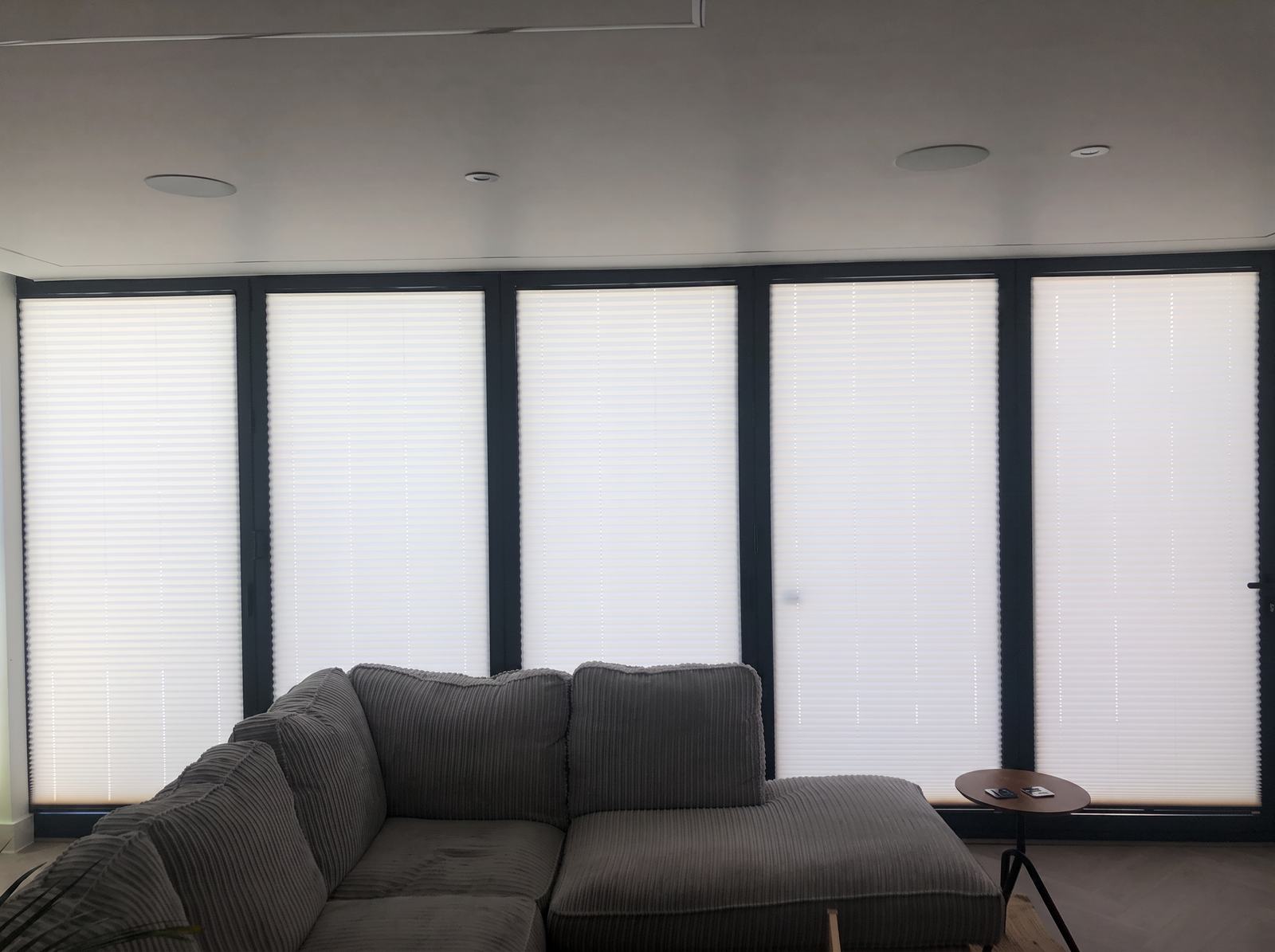
Compact folds close to the glass
Pleated Blinds use fabric folded into a concertina shape. The material compresses into a small stack when opened, making the style useful where bulky window coverings would get in the way. They can suit conservatories, glazed doors and windows that need a neat, close-fitting finish. A pleated fabric is not itself a fixing method: the mounting system must also suit the frame, glass and way the opening is used.
Single pleat and honeycomb fabrics
Single-pleat fabric creates a crisp folded surface, while honeycomb fabric has a cellular construction. Honeycomb designs can help limit heat transfer through the covered part of a window, but the effect depends on the fabric, fit and glazing; we do not promise a specific energy saving. Light-filtering materials soften daylight, while opaque options offer more screening. A blackout fabric does not necessarily stop light at the edges. Samples make it easier to compare the surface texture and the appearance of a colour against your own glass.
Windows, doors and fitting systems
For a conservatory, think about whether each pane needs independent control as sunlight moves around the room. On a glazed door, clearance for the handle and room to open are essential. Suitable INTU or other frame-fitting arrangements may avoid drilling, but compatibility needs to be checked rather than assumed. Bi-fold doors add hinges, seals and folded door stacks to the assessment. Our Bifold Door Blinds page looks at those details, while the INTU No-Drill page explains the mounting approach separately.
Operation and practical care
Some pleated systems can be positioned to screen a lower section of glass while leaving daylight above; availability depends on the chosen system. Cordless operation may be especially useful on doors, but all accessible cords must be considered as part of child safety. Motorised options depend on the blind construction and mounting arrangement. Read our Smart Automation page and discuss compatibility before ordering. For care, protect the folds from snagging and use the manufacturer’s cleaning guidance: cellular and coated fabrics should not all be cleaned in the same way.
A home visit with real samples
Family-run Richmond & Twickenham Blinds Ltd has operated since 2006 from Twickenham, with Mark Davies running the business. There is no showroom. Mark brings samples to your home, measures the glazing and checks the frame before giving a free no-obligation quote. That visit lets you compare light filtering with opaque fabrics in the actual room rather than choosing from a screen alone. Standard new-blind turnaround is 2 weeks, and 3-day express is available with the selected system and schedule confirmed before ordering. Book a free home quote to discuss your conservatory, windows or glazed doors.
Pleated Blinds questions
- What is the difference between pleated and honeycomb?
- A single pleat is a folded sheet; honeycomb fabric forms cells. We bring samples to compare appearance and light filtering.
- Are all Pleated Blinds no-drill?
- No. Pleated describes the fabric style. A compatible INTU or frame-fitting system determines whether drilling can be avoided.
- Can they fit bi-fold doors?
- Often, with a suitable frame and enough clearance. We check handles, hinges, seals and folded-door movement.
- Can a Pleated Blind be motorised?
- Compatibility varies by construction and fitting system. Discuss the chosen arrangement before ordering.
- Do you have a showroom?
- No. Samples come to a free home visit. New blinds have a 2-week standard turnaround, with 3-day express available after confirmation.
Compare other blind types
- Roller Blinds
- Roman Blinds
- Wooden Venetian Blinds
- Vertical Blinds
- Blackout Blinds with Side Channels
- INTU No-Drill Blinds
- Blind Repairs
- Bifold Door Blinds